

After my sophomore year, I was selected to attend a for-credit trip my school offered to England to explore the legacy that Rome created in Britannia and how England has decided to preserve that legacy.
On our first day of the trip, we traveled from Heathrow to Bath to explore the city’s famous Roman Baths. After learning about these baths in the classroom, I was excited to see the complex in person! The Romans had a strong bathing culture, and Romans of any class could be seen at a bathhouse nearly every day. The Roman Baths at Bath were created around 70 CE, as Rome expanded their power into Northern and Western Britannia under Agricola. The complex was built around a hot spring known as Aquae Sulis, which the Romans believed to have health benefits. The bath complex was built over the spring, as well as a temple dedicated to the goddess of healing, Sulis-Minerva, who was believed to inhabit this spring.
The Romans followed a typical bathing ritual each day, which included: 1) cold plunging at the frigidarium to stimulate circulation, 2) adjusting to warmer waters at the tepidarium, 3) taking a hot bath and receiving steam treatments at the caldarium, and 4) returning back to the frigidarium for a last rinse.
The Romans not only went to the baths for hygienic and health benefits but also for social reasons. Romans would go to the baths to gossip with friends, learn the news, make business deals, and more.
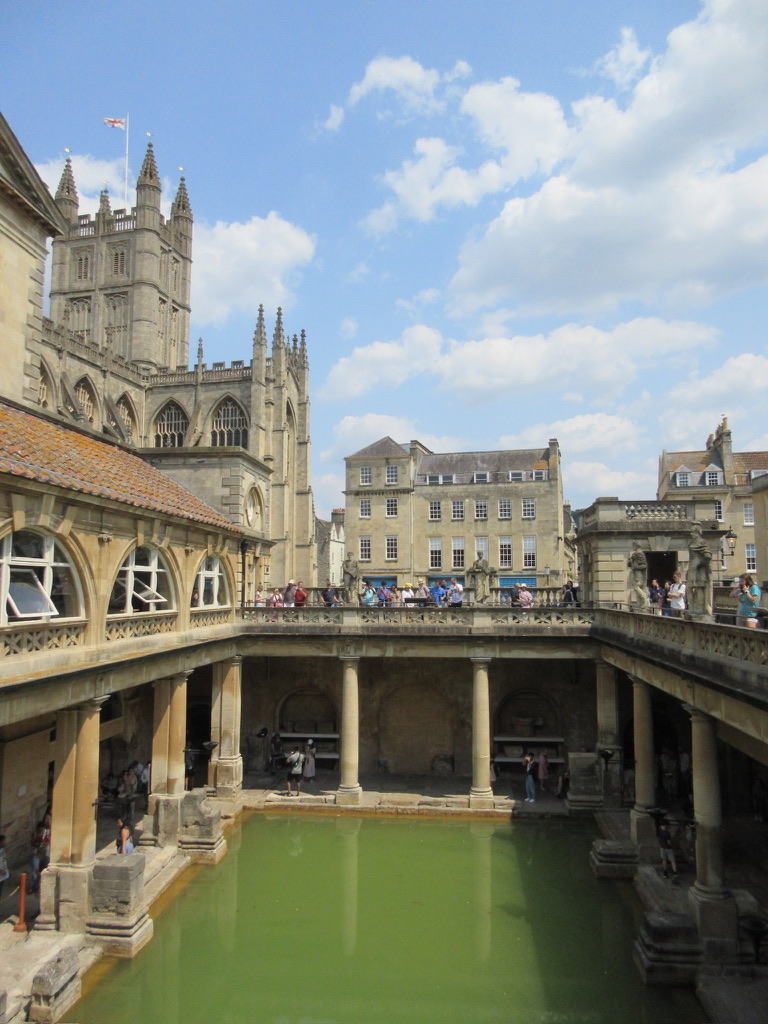
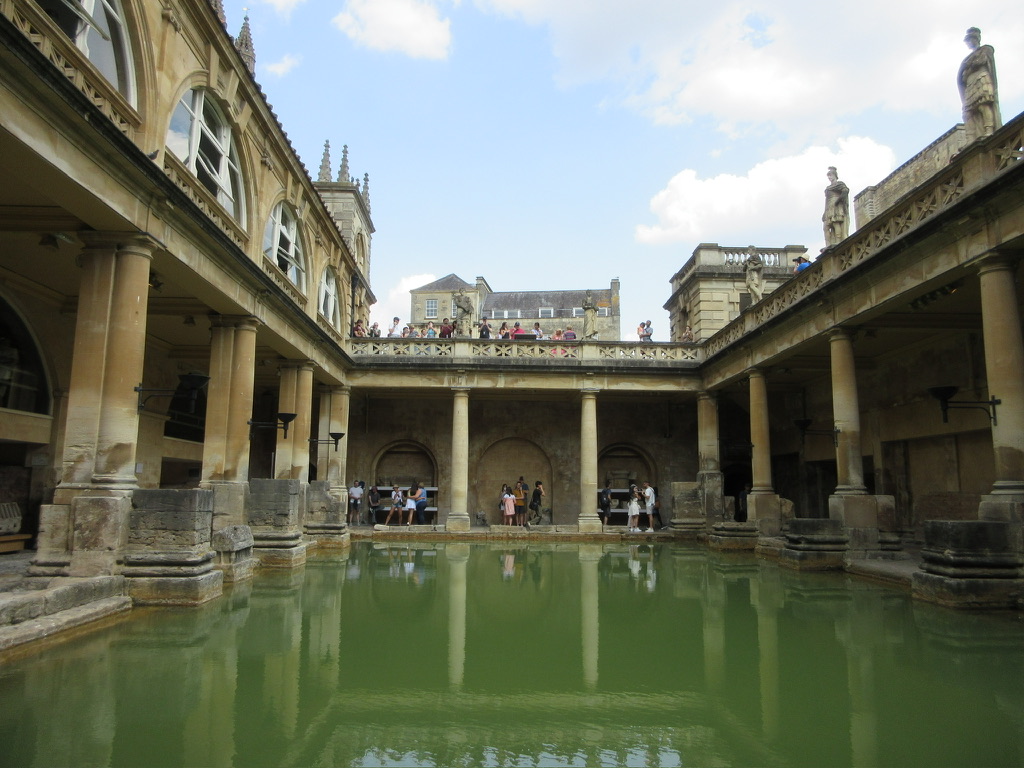
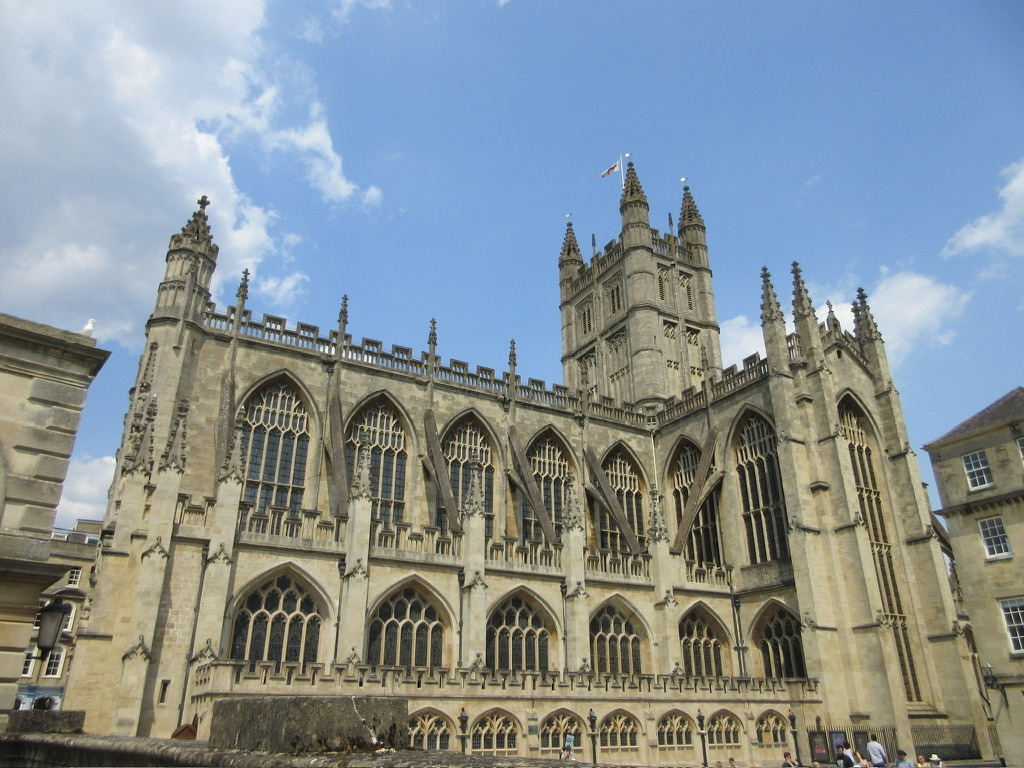
The main attraction is the Great Bath at the center of the complex, with a terrace surrounding it on top. From the terrace, one can see the Bath Abbey, which began construction in 1499 and is in the English Gothic style. In Roman times, the Great Bath was covered and not in the open air, which you can see above in the image of a replica of the baths. The smaller bathing rooms and pools surround the Great Bath.
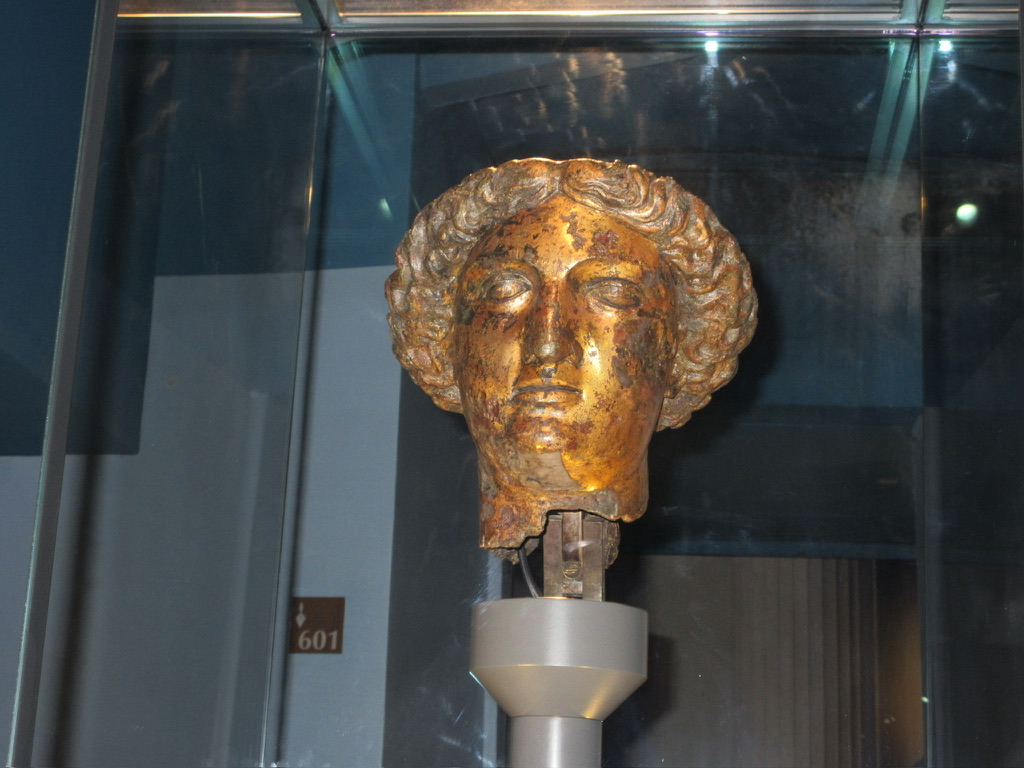
The complex contains the remains of the Temple dedicated to Sulis-Minerva. As seen in the photo above, the famous sculpture of her head is in the museum.
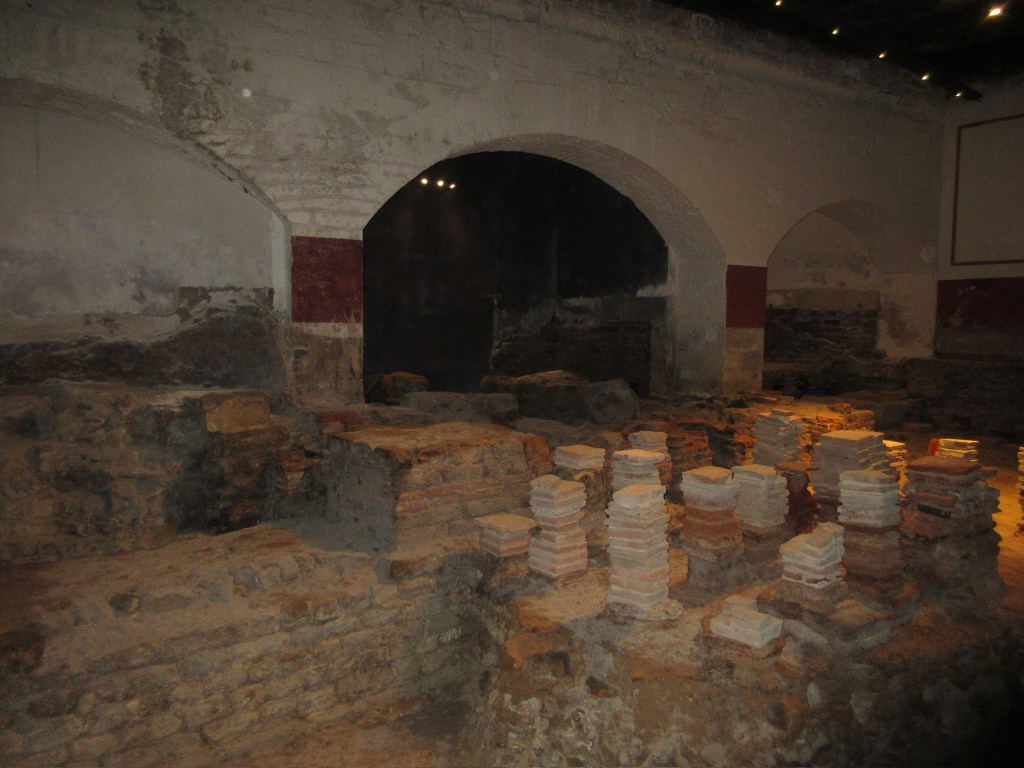
To warm the waters at the baths, the Romans used hypocausts. They would burn a fire within a furnace underground; the smoke and hot air from the fire would then travel out of the furnace, circulate around pilae stacks (tile stacks) underground, and then up through flues in the wall to outlets in the roof, heating the walls and floors of the room.
 Katharine's Klassics
Leave a comment