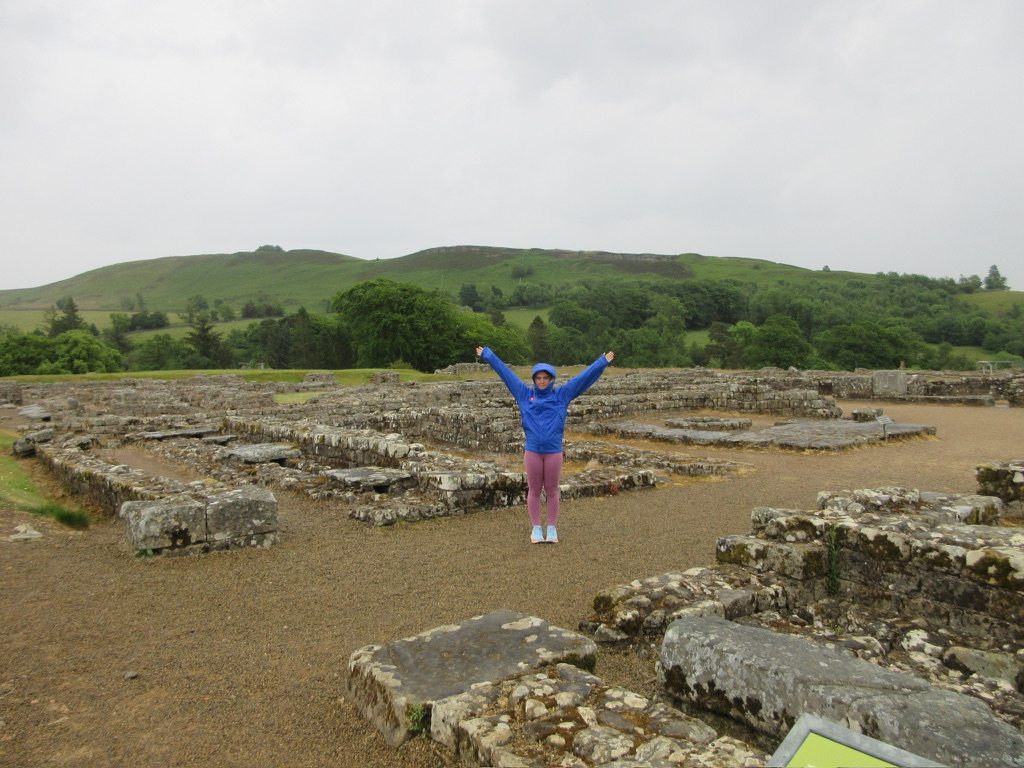
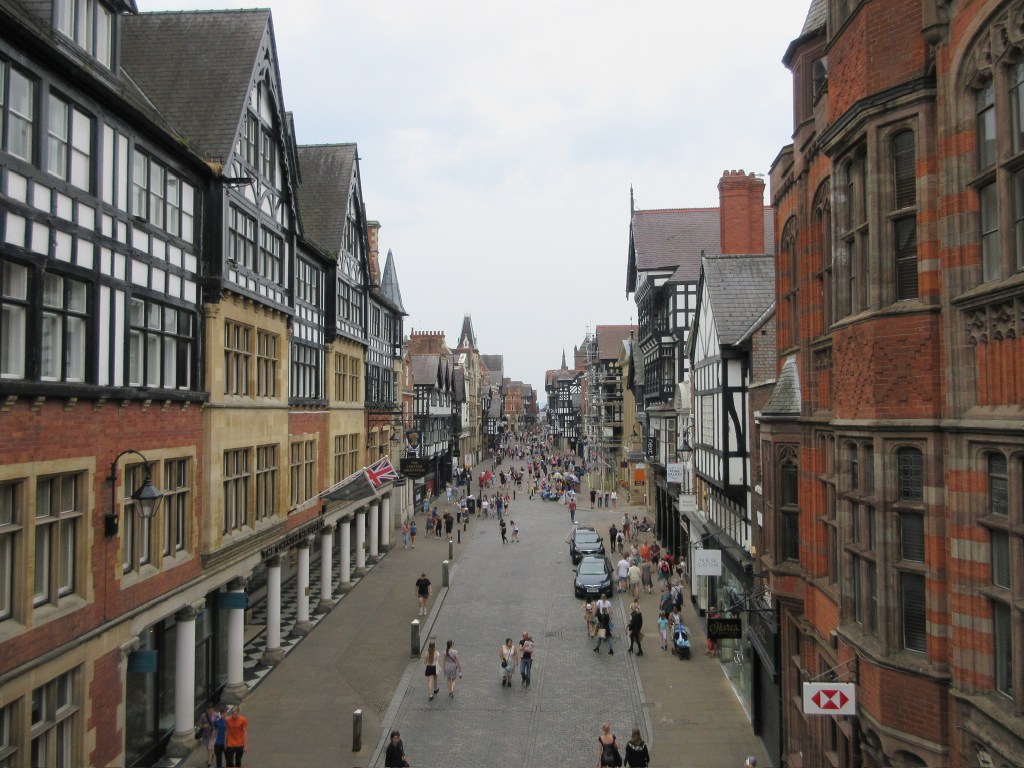
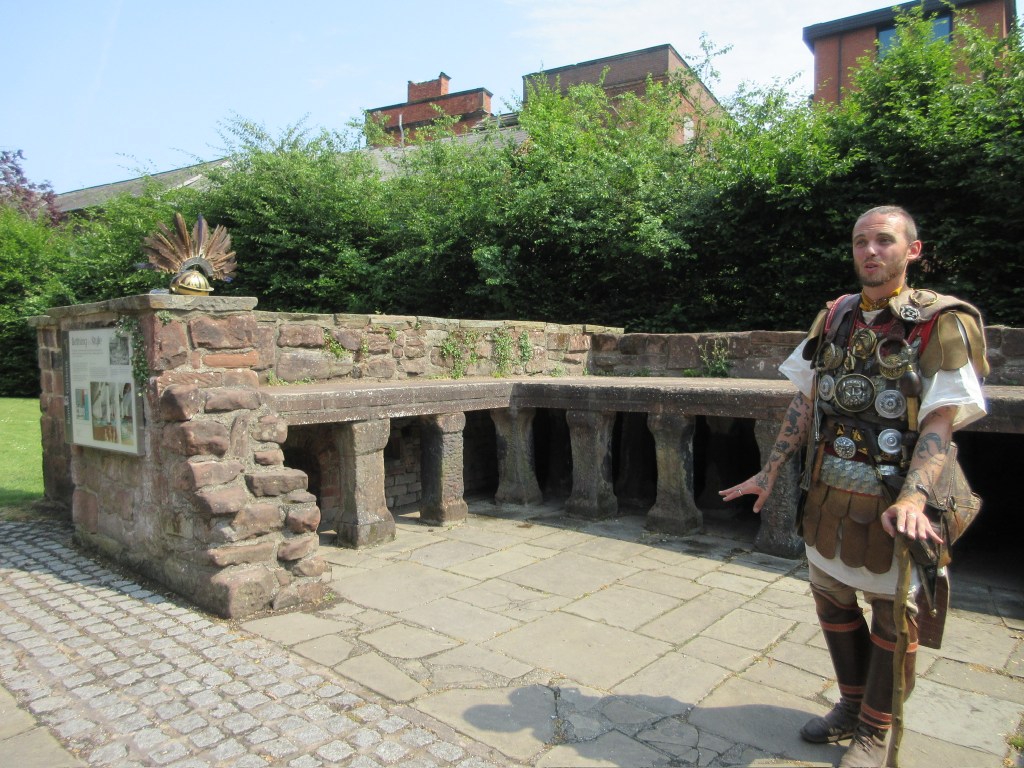

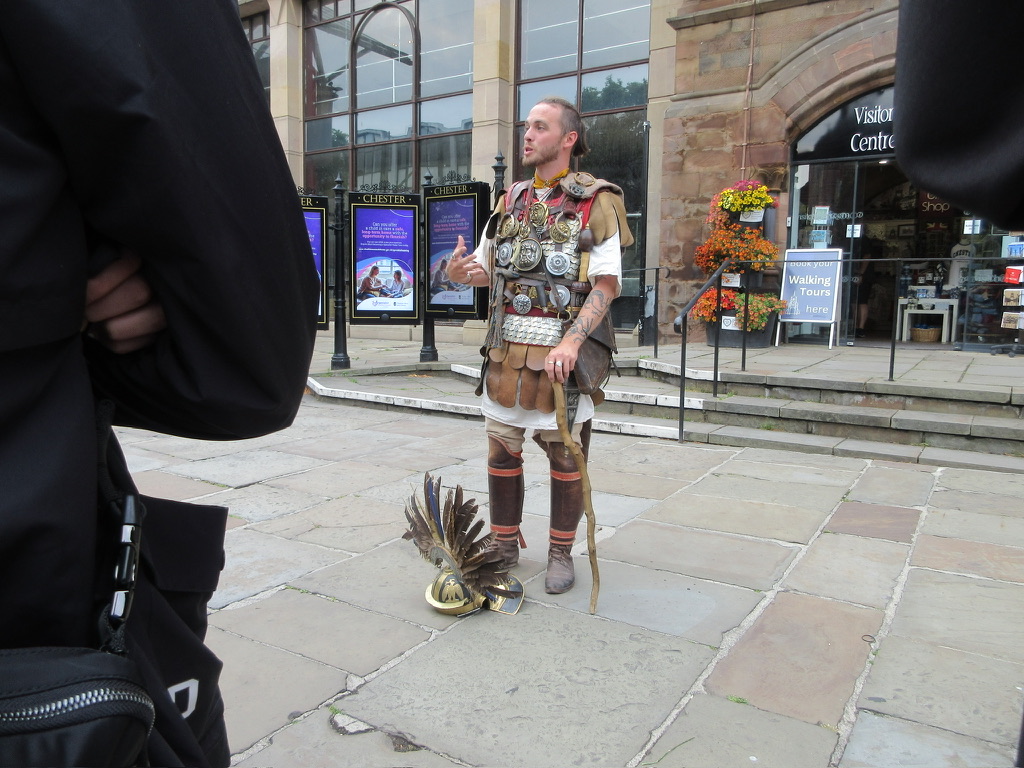
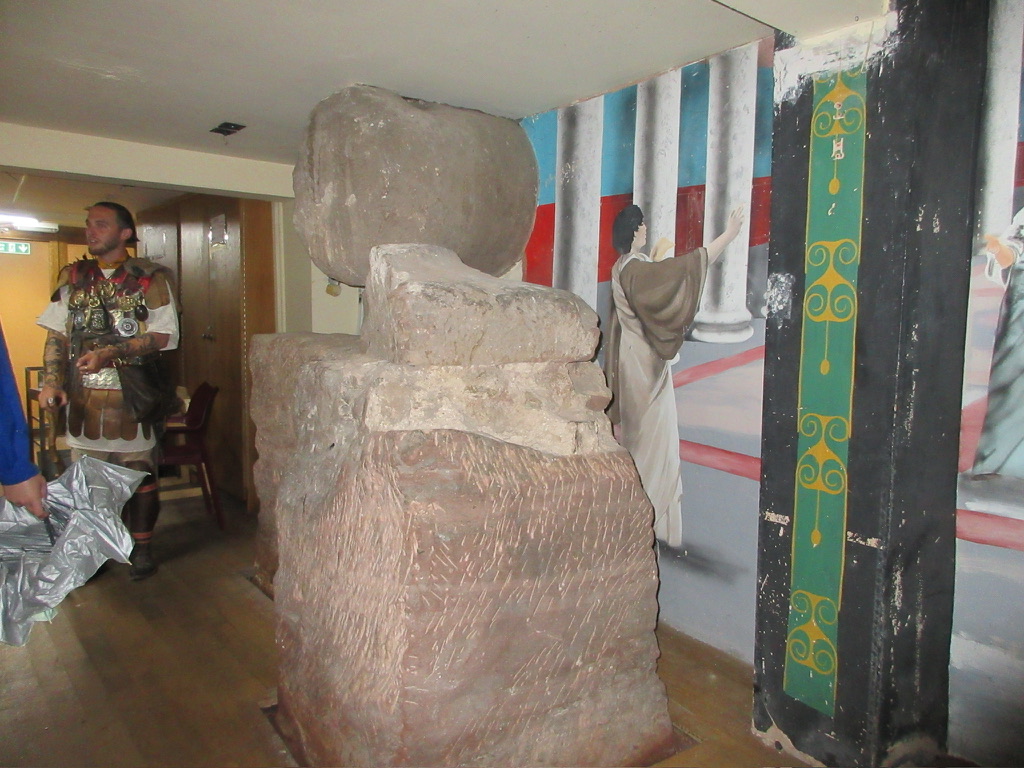
For our last day near the Welsh border, we visited the city of Chester, where many Roman ruins are hidden in plain sight. Chester was built on top of Deva, a legionary fortress town. We met our tour guide, who was dressed in full Roman military attire for the occasion. We walked around the city, exploring all of the ruins it had to offer.
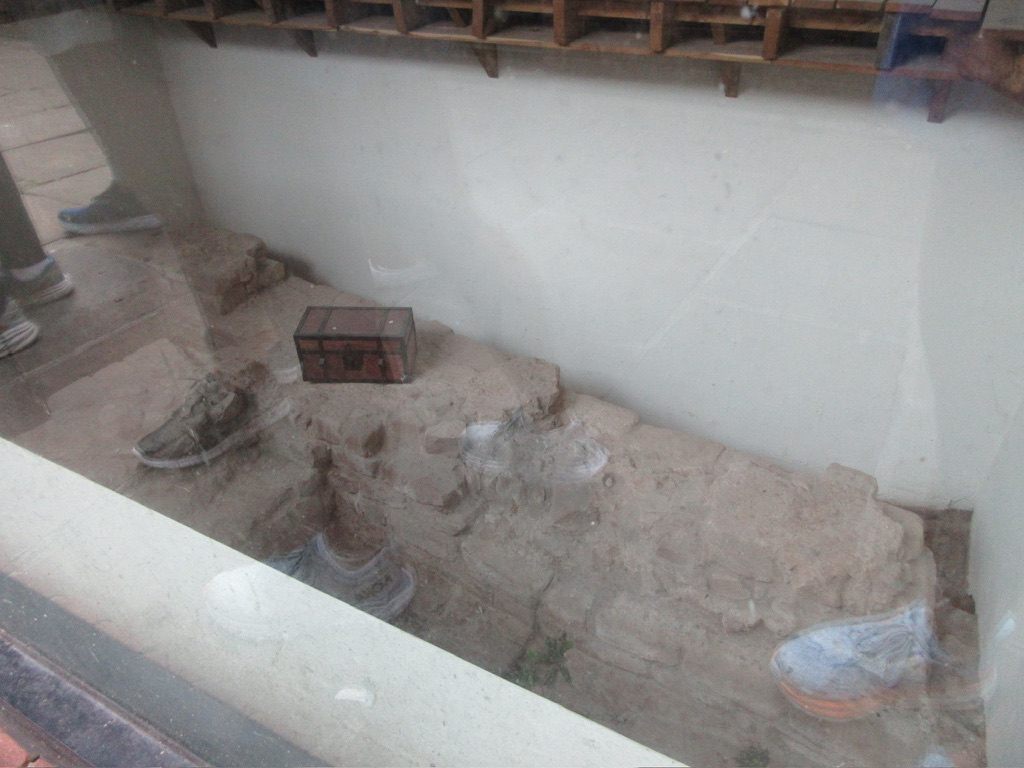
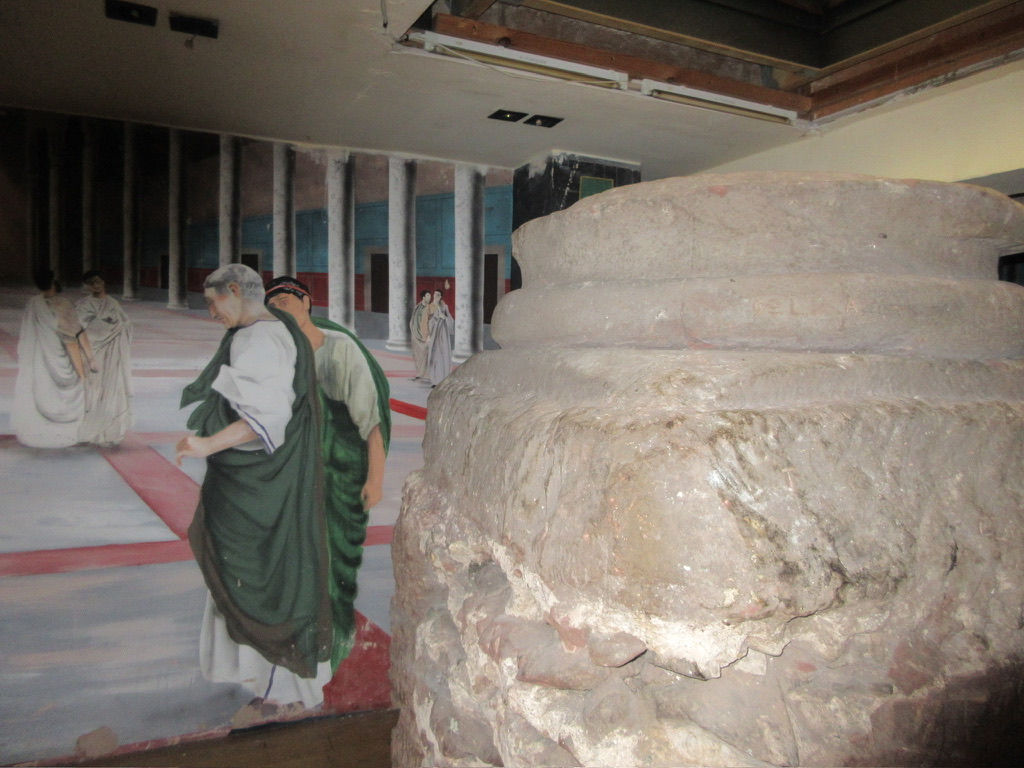
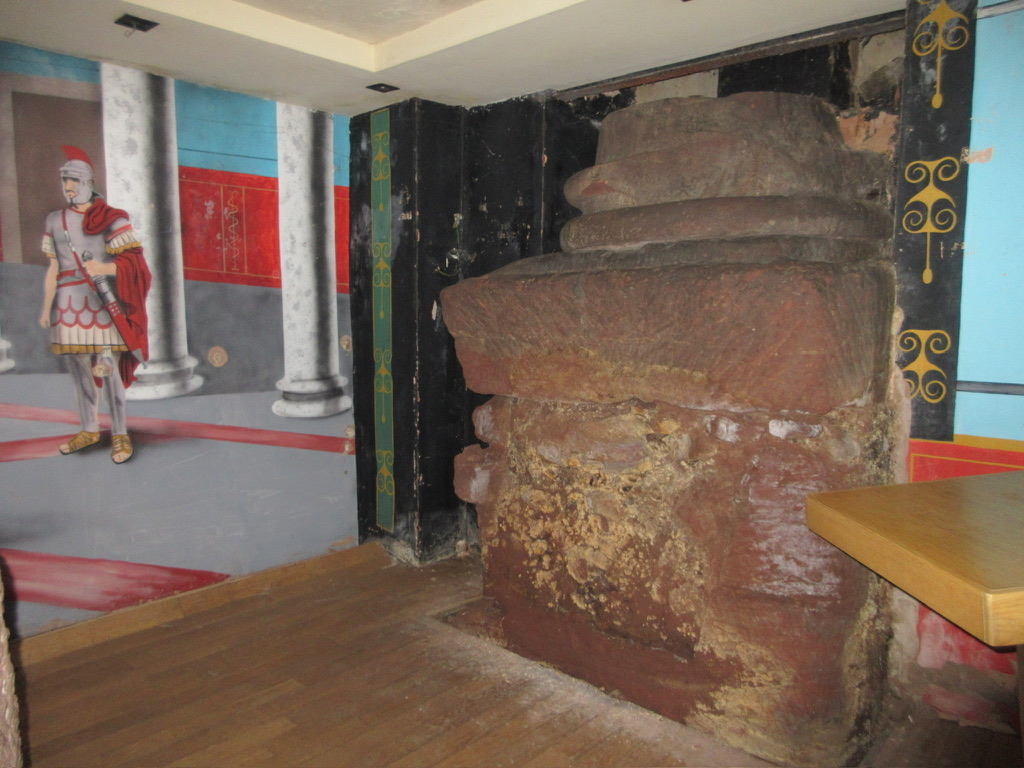
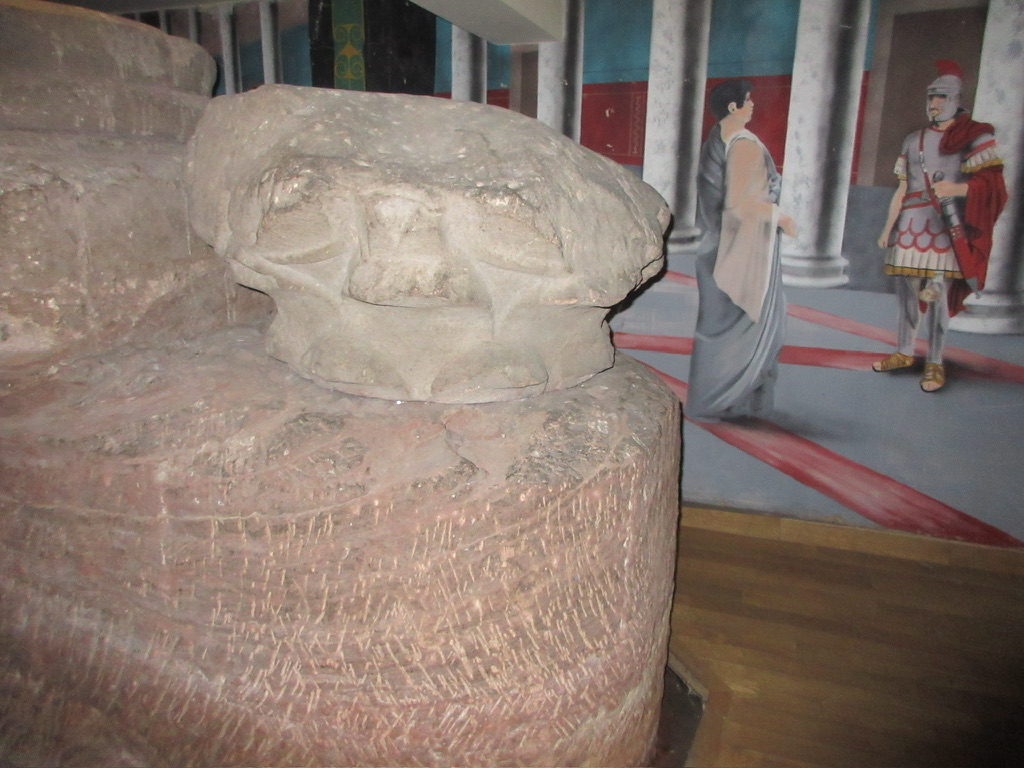
Our first stop was utterly unexpected. In the basement beneath a Pret-A-Manger are the bases and remnants of columns from the principa, the large administrative building for the Roman soldiers stationed in the fortress. When we walked into the Pret, I was confused as to why we were in there, but once we got to the basement, I was completely shocked. The columns were massive in size. Just from the few that were excavated, I was able to imagine just how big the building was. Underneath another building, we were able to peer down into what would be our modern equivalent of a safe at a bank, where all the soldiers’ money was stored.
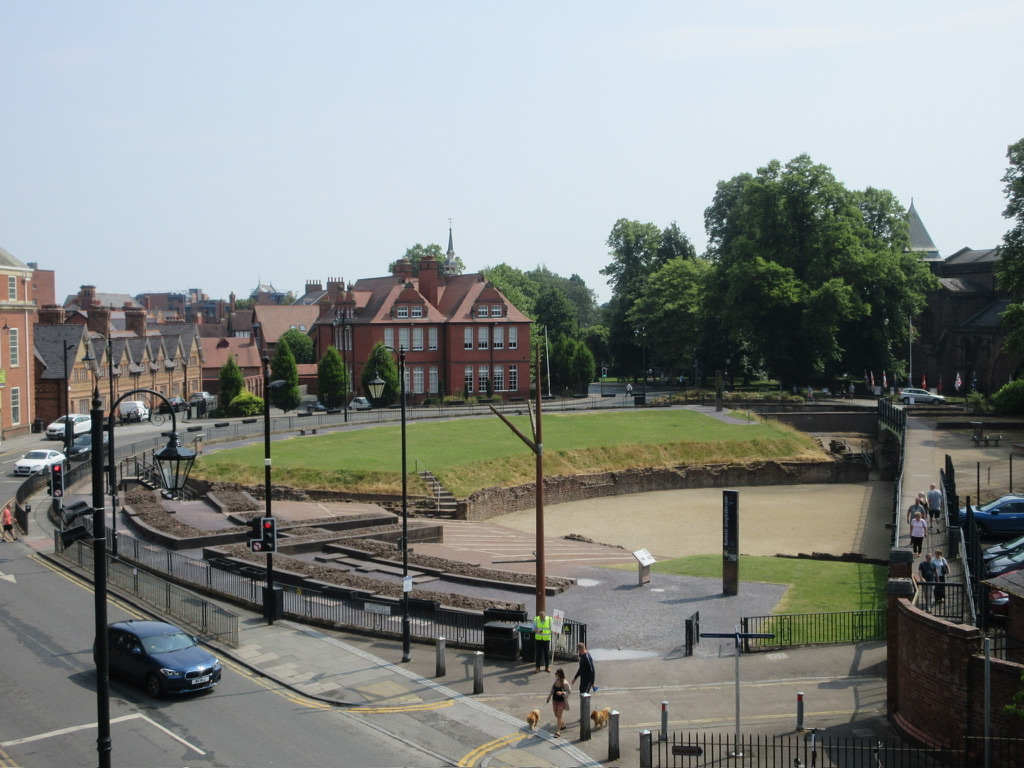
We then walked along the Chester city walls, initially Roman walls surrounding the fortress. The walls were continually built past the Roman times as a defensive system for Chester. As we walked along the walls, we approached the Chester Roman Amphitheater. Only the north half of the structure is uncovered, as the other half is underneath buildings and roads. It is the largest amphitheater uncovered in Britain, so far.
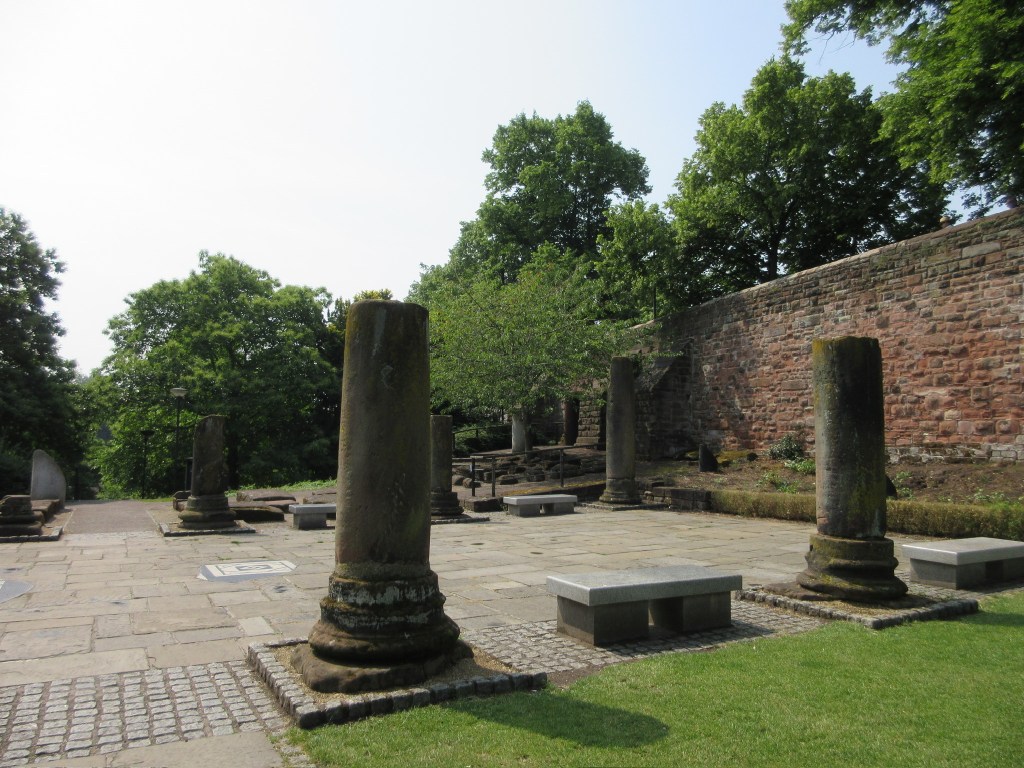
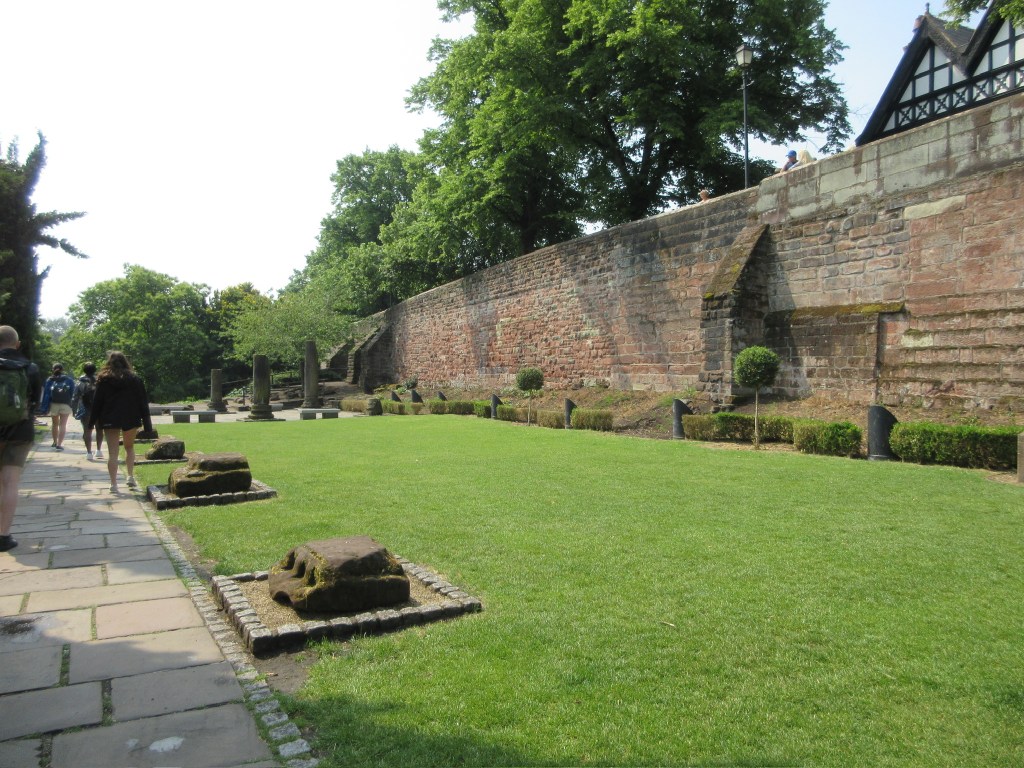
Lastly, we saw the Chester Roman Gardens, which was built to display excavations in the 1940s. Here, we saw columns from the gymnasium, which would have been at the bathing complex. We also saw a reconstructed hypocaust.
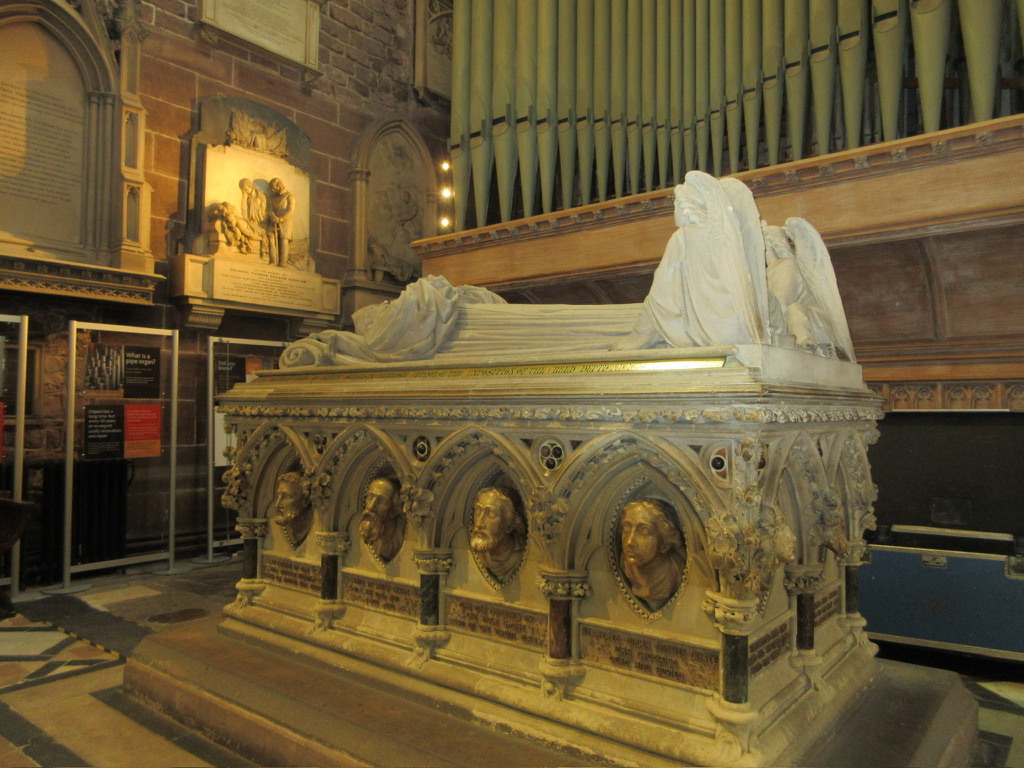
After our tour, we continued to explore Chester, including the cathedral. The oldest parts of the cathedral date back to 1093. Pictured above is the tomb of John Pearson, a bishop of Chester in the 1600s.
 Katharine's Klassics
Leave a comment